
Visual content isn’t just a nice-to-have for med spas anymore. It’s the engine driving client decisions, bookings, and brand loyalty. Video content boosts engagement 85% while Instagram alone accounts for 60% of web traffic through visual posts. Yet most med spas still treat photography as an afterthought and wonder why their social feeds aren’t converting. In this guide, you’ll learn the science behind visual engagement, which content types perform best, where to publish them, and the legal guardrails every med spa needs to respect. No fluff, just strategies you can act on today.
Table of Contents
- The science behind visual engagement: Why it matters for med spas
- Types of visual content: What works best for med spas
- Best platforms for med spa visuals: Where to engage clients
- Legal and ethical considerations: Avoiding marketing mishaps
- Our perspective: Why visuals are underutilized and what actually works
- Ready to unlock visual marketing for your med spa?
- Frequently asked questions
Key Takeaways
| Point | Details |
|---|---|
| Visuals drive engagement | Video and photo content boost client interaction and brand recall for med spas. |
| Choose the right format | Photos, videos, and graphics fit different platforms and goals—each has unique benefits. |
| Instagram is powerful | Instagram visuals generate the highest web traffic and client interest. |
| Legal compliance is essential | Always secure written consent and avoid misleading edits to protect your brand and clients. |
| Authenticity beats perfection | Clients connect more strongly with honest, well-lit visuals than with ‘perfect’ but deceptive images. |
The science behind visual engagement: Why it matters for med spas
The human brain processes images roughly 60,000 times faster than text. That’s not a metaphor. It’s a neurological reality that shapes how potential clients form opinions about your med spa before they read a single word of your copy. When someone lands on your Instagram profile or website, their brain is already making trust judgments based on what it sees, not what it reads.
This matters enormously for med spas because your services are inherently visual. Skin texture, facial symmetry, body contouring results — these outcomes can’t be described as effectively as they can be shown. Clients aren’t just buying a treatment; they’re buying a vision of themselves. Visual content is the bridge between their current state and the result they’re hoping for.
The data backs this up clearly. Visuals increase content shares by 30%, which means every compelling photo or video you post has compounding reach potential. One strong before-and-after image can travel far beyond your existing followers when it resonates.
“Instagram drives 60% of web traffic through visual posts for med spas, making it the single most powerful visual platform for client acquisition in the aesthetics industry.”
Beyond reach, visual storytelling builds brand recall. Studies in consumer psychology consistently show that people remember 65% of information paired with a relevant image, compared to just 10% of text-only content three days later. For med spas competing in crowded local markets, being memorable is half the battle.
Here’s what strong visual content actually does for your practice:
- Builds immediate trust by showing real results from real clients
- Reduces purchase anxiety by making the treatment process feel familiar and approachable
- Differentiates your brand in markets where multiple med spas offer identical services
- Drives organic reach through shares, saves, and algorithm-favored formats like Reels
Explore content ideas for engagement to see how these principles translate into specific post formats that perform well for aesthetic practices.
Types of visual content: What works best for med spas
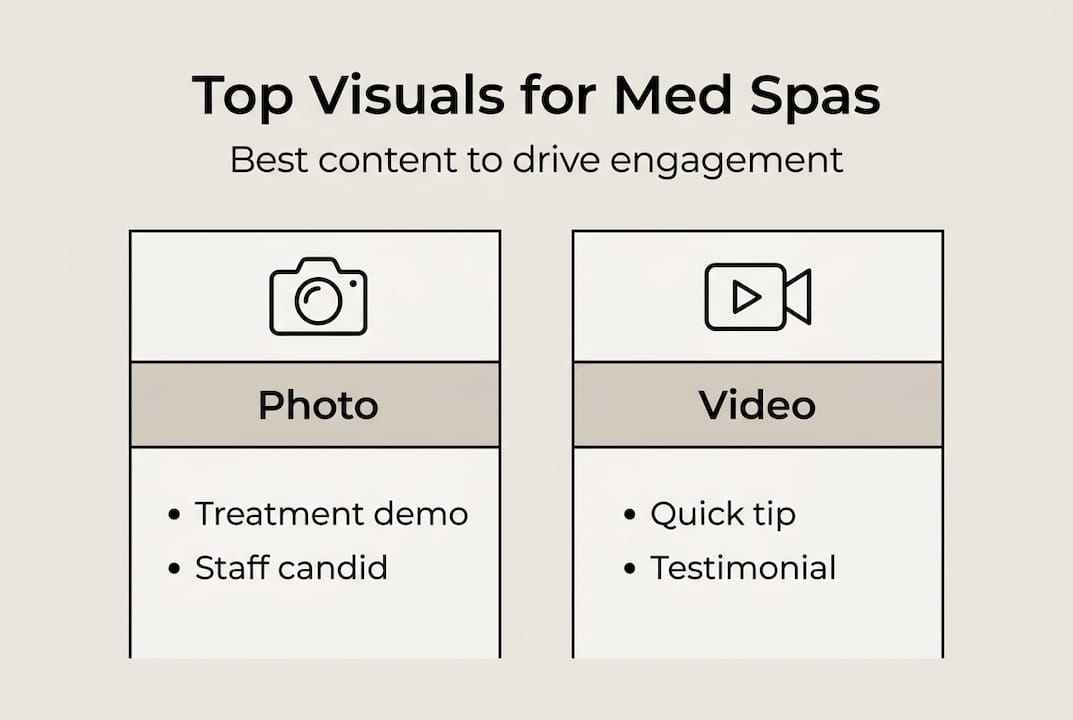
Not all visual content is created equal. A polished product photo performs differently than a 15-second treatment walkthrough video, and both serve different purposes in your marketing funnel. Knowing which format to use, and when, separates med spas that grow from those that just post and hope.
| Content type | Best platform | Strengths | Limitations |
|---|---|---|---|
| Before-and-after photos | Instagram, website | High trust, strong conversion | Consent required, FTC rules apply |
| Short-form video (Reels/TikTok) | Instagram, TikTok | Highest reach, algorithm-favored | Time-intensive to produce |
| Branded graphics | Facebook, email | Educational, shareable | Lower emotional impact |
| Behind-the-scenes photos | Instagram Stories | Builds authenticity and rapport | Short shelf life |
| Treatment walkthrough videos | YouTube, website | SEO value, deep trust-building | Longer production time |
Here are the top strategies for each content type:
- Before-and-after photos: Shoot in consistent lighting with the same camera angle for both images. Inconsistency undermines credibility and can trigger FTC scrutiny.
- Short-form video: Lead with the result in the first two seconds. Viewers decide whether to keep watching almost instantly.
- Branded graphics: Use your brand colors and fonts consistently. Recognition builds over time when your visuals have a unified look.
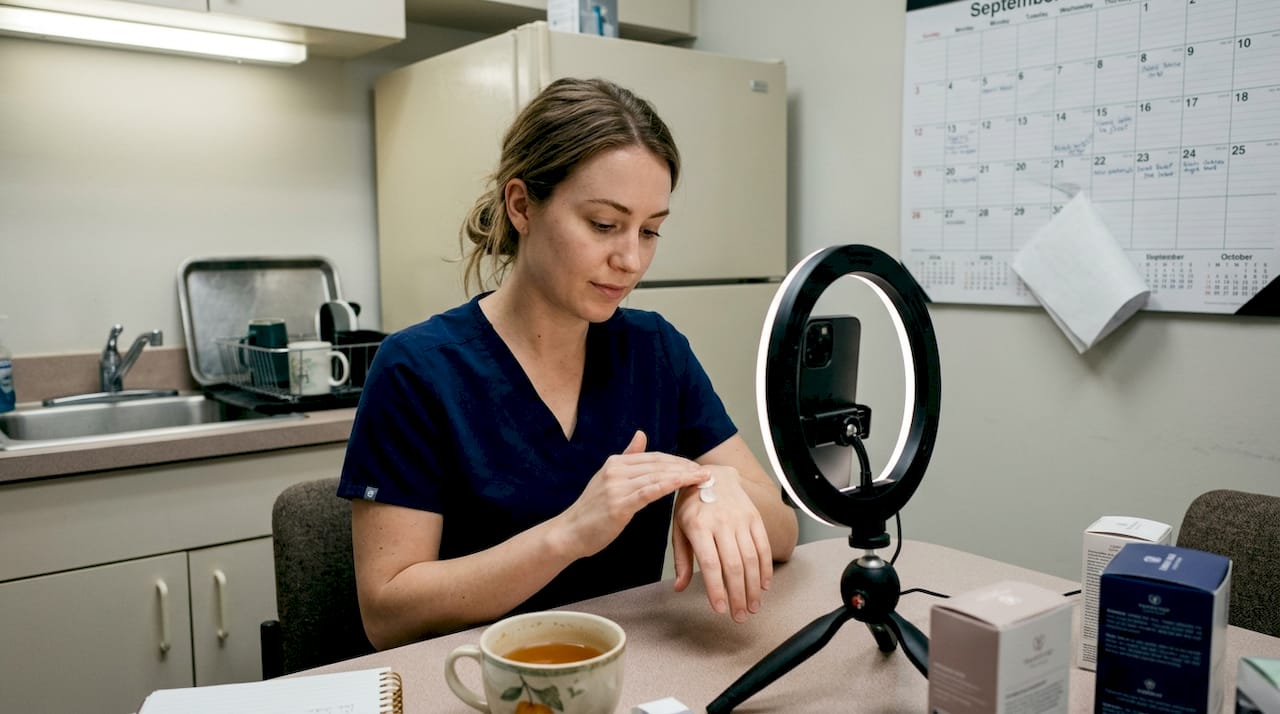
- Behind-the-scenes content: Show your team preparing for a treatment or discussing a client’s care plan. This humanizes your practice in a way polished photos can’t.
- Treatment walkthroughs: These work especially well on your website’s service pages, where clients are already in research mode.
Pro Tip: Match your content format to the platform’s native behavior. Instagram rewards vertical video. Facebook favors link-heavy posts less than it used to, so native video performs better. Optimize visuals for social media by formatting each asset specifically for where it will live, not just repurposing one version everywhere.
Boosting engagement with visuals starts with understanding that variety matters. A feed that mixes formats keeps your audience engaged longer and signals to algorithms that your content is worth distributing.
Best platforms for med spa visuals: Where to engage clients
Creating great visual content is only half the equation. Publishing it in the right place determines whether it reaches the clients who are actually ready to book.
| Platform | Primary visual format | Avg. engagement rate | Best for |
|---|---|---|---|
| Photos, Reels, Stories | 1.5% to 3.5% | Brand building, before-and-after, local reach | |
| TikTok | Short-form video | 4% to 9% | Younger demographics, viral potential |
| Photos, native video | 0.5% to 1.5% | Community building, paid ads, older demographics | |
| YouTube | Long-form video | Varies by niche | SEO, treatment education, trust-building |
Instagram drives 60% of web traffic for med spas through visual posts, making it the non-negotiable starting point for any visual strategy. But that doesn’t mean you ignore the others.
Platform-specific best practices worth following:
- Instagram: Post Reels at least twice per week. Use location tags on every post to capture local search traffic. Stories drive direct messages, which convert to consultations.
- TikTok: Educational content performs exceptionally well here. “What happens during a HydraFacial” style videos regularly reach audiences far beyond your follower count.
- Facebook: Use it primarily for community engagement and paid retargeting. Organic reach is limited, but your existing clients are likely active here.
- YouTube: Longer treatment videos rank in Google search results, giving you SEO value that social platforms can’t match.
One critical pitfall: TikTok bans certain before-and-after content related to cosmetic procedures, particularly when it appears to promote unrealistic outcomes. What’s acceptable on Instagram may get your TikTok account flagged or removed. Always review each platform’s community guidelines before publishing sensitive treatment results.
For deeper guidance on building a platform-specific approach, review social media strategies tailored specifically to aesthetic practices.
Legal and ethical considerations: Avoiding marketing mishaps
Visual content can build your med spa’s reputation fast. It can also destroy it just as quickly if you’re not careful. The legal landscape around aesthetic marketing is more complex than most owners realize, and the consequences of getting it wrong range from platform bans to FTC investigations.
Common legal pitfalls to avoid:
- Misleading before-and-after edits: Using different lighting, filters, or angles between the before and after images is considered deceptive advertising under FTC guidelines
- Lack of written patient consent: Posting any image that identifies a client, including partial face shots, without documented consent violates HIPAA’s protected health information rules
- Unverified claims: Stating that a treatment “eliminates” wrinkles or “permanently removes” fat without clinical backing is a compliance risk
- Reposting client selfies without permission: Even if a client tags your spa, reposting without explicit written consent creates legal exposure
- Platform-specific violations: TikTok and Meta each have their own policies that may be stricter than federal law in certain areas
“Inconsistent lighting or editing between before-and-after images constitutes misrepresentation under FTC standards, and full-face images require explicit patient consent under HIPAA.”
Pro Tip: Build a simple consent workflow into your intake process. Before any treatment, have clients sign a photo release that specifies exactly how their images may be used, which platforms, whether their face will be shown, and for how long. This one step protects you across every channel.
For a broader look at how compliance fits into your brand strategy, read about digital branding compliance and explore real-world compliance examples from practices that have navigated these challenges successfully.
Our perspective: Why visuals are underutilized and what actually works
Here’s the uncomfortable truth most marketing agencies won’t tell you: the med spas with the most polished feeds often have the lowest conversion rates. They’ve optimized for aesthetics (no pun intended) at the expense of authenticity.
Clients don’t book because your photos look like a luxury magazine spread. They book because they saw someone who looked like them get a result they want. That’s it. Authentic storytelling, imperfect lighting and all, consistently outperforms studio-quality content that feels staged and unrelatable.
We’ve seen this pattern repeatedly. A med spa invests thousands in a professional photo shoot and gets minimal engagement. Then a nurse injector posts a casual 30-second Reel explaining what Botox actually feels like, and it generates 20 new consultation requests in a week.
The real opportunity isn’t in producing more content. It’s in producing more honest content. Start small. Post one authentic piece per week, measure the response, and refine based on what your actual clients respond to, not what looks impressive in a portfolio. Explore proven med spa strategies that prioritize real results over surface-level polish.
Ready to unlock visual marketing for your med spa?
Visual content strategy isn’t a one-time project. It’s an ongoing system that requires the right tools, the right platforms, and the right expertise to execute consistently. At Aesthetic Rank Lab, we specialize exclusively in med spa marketing, which means we understand the compliance requirements, the platform nuances, and the audience psychology that drives bookings in your specific industry.
From building content calendars to managing your improve your social visuals presence across platforms, we handle the execution so you can focus on your clients. Whether you’re starting from scratch or looking to scale what’s already working, our Smart Website ecosystem and full-service marketing approach give your practice a measurable edge. Learn how we help practices boost your med spa sales through visual-first strategies built for growth.
Frequently asked questions
Which visual content type drives the most conversions for med spas?
Video content drives 85% more engagement than static images, making it the highest-converting format for med spa marketing. Short-form Reels and treatment walkthroughs tend to generate the most consultation requests.
Are there legal risks in posting before-and-after photos?
Yes. Misleading edits and missing consent can violate FTC advertising standards and HIPAA’s protected health information rules, particularly when full-face images are involved.
What platform is best for med spas to showcase visual content?
Instagram is the strongest starting point, since 60% of med spa web traffic comes through visual posts on the platform. TikTok offers higher organic reach for video content targeting younger demographics.
How can med spas maximize visual content impact without breaking FTC rules?
Use honest, unedited before-and-after images, secure written consent before posting any client photo, and avoid unverified outcome claims. Consistent lighting and angles are the simplest way to stay compliant while maintaining credibility.