
TL;DR:
- Storytelling builds emotional trust and long-term loyalty for med spas.
- Authentic, detailed stories of real clients and staff outperform polished content.
- Sharing relatable narratives across channels enhances brand recognition and client engagement.
Most med spa owners invest heavily in polished before-and-after photos, sleek treatment menus, and eye-catching ads. Those visuals matter, but they rarely close the trust gap between a curious browser and a booked client. What actually moves people from “maybe” to “yes” is a story they can see themselves in. This guide breaks down practical storytelling techniques built specifically for med spas, so you can build deeper emotional connections, earn lasting loyalty, and consistently attract new clients who already feel like they know you.
Table of Contents
- Why storytelling matters for med spas
- Elements of effective storytelling in med spas
- Real-world storytelling: Case studies and authentic voices
- Sharing your med spa’s story across marketing channels
- Why authentic storytelling outperforms generic marketing
- Boost your med spa’s growth with expert storytelling solutions
- Frequently asked questions
Key Takeaways
| Point | Details |
|---|---|
| Authenticity wins trust | Clients connect more deeply with real, relatable stories about your team and patient journeys. |
| Subtlety over exaggeration | Showcase nuanced, natural results rather than extreme transformations to appeal to modern med spa clients. |
| Use a proven framework | The ‘Challenge-Solution-Result-Takeaway’ method brings clarity and impact to client case studies. |
| Share across channels | Distribute your spa’s stories on social media, websites, and in person for maximum engagement. |
| Leverage team personalities | Humanizing your staff through storytelling fosters deeper parasocial relationships and brand loyalty. |
Why storytelling matters for med spas
The aesthetic industry is crowded. Most med spas offer overlapping services, similar pricing, and comparable technology. What you cannot easily copy is a voice, a story, or a genuine relationship. That is where storytelling becomes your sharpest competitive tool.
When clients scroll through options, they are not just comparing laser machines or filler brands. They are asking themselves a quieter question: “Do I trust these people enough to let them touch my face?” That question is emotional, not clinical. And it requires an emotional answer.
Storytelling does that work naturally. When your content shows the real people behind the front desk, the intention behind a treatment choice, or the genuine journey of a client working toward a goal, you give potential clients something to connect with. You become familiar before they ever walk in the door.
This familiarity is what researchers and content strategists call a parasocial relationship. It is a one-sided but very real sense of connection that audiences form with brands, creators, or personalities they follow consistently. Using narrative structure humanizes the med spa team and helps build parasocial relationships. In practice, that means clients who have never met your injector may already feel like they trust her because they have watched her explain her philosophy in a series of Instagram posts.
Here is what strong storytelling accomplishes for a med spa:
- Differentiates your brand from competitors who all look and sound the same
- Builds emotional investment so clients feel loyal before their first appointment
- Supports trust by showing real people, real intentions, and real outcomes
- Reduces price sensitivity because clients who connect with your story value the experience, not just the deal
- Attracts aligned clients who already understand and respect your approach
“People don’t buy from companies. They buy from people they trust. Storytelling is how trust gets built at scale.”
To see how storytelling and visual content strategies can reinforce each other across platforms, it helps to start with a solid foundation for what actually makes a story work.
Elements of effective storytelling in med spas
Not all stories land equally. A vague testimonial that says “I loved my results!” does almost nothing. A specific story that walks through someone’s actual experience creates connection, credibility, and confidence. The difference is structure.
The most effective framework for med spa content is the Challenge-Solution-Result-Takeaway model. This structure is especially effective for case studies and treatment narratives. Here is how it plays out in practice:
- Challenge: Describe the situation before treatment. What was the client feeling? What was bothering them? Keep it relatable, not dramatic.
- Solution: Explain the treatment chosen and why. What made it the right fit for this specific person? This is where your expertise shines without sounding like a brochure.
- Result: Share the outcome in real, human terms. Not just “she looked better,” but “she stopped avoiding mirrors” or “he finally felt comfortable in professional photos.”
- Takeaway: What does this story mean for the reader? What can they learn or feel hopeful about?
This is different from a clinical outcome story, which typically just documents a before-and-after with no emotional arc. Brand-building stories, on the other hand, invite the reader into a moment of real human experience.
| Story type | Primary goal | Best channel |
|---|---|---|
| Patient journey | Build relatability and trust | Blog, email newsletter |
| Team origin story | Humanize the brand | Website “about” page, Instagram |
| Treatment education | Inform and reduce hesitation | YouTube, blog, email |
| Staff spotlight | Show culture and expertise | Instagram, Facebook |
| Founder story | Establish vision and values | Website, long-form video |
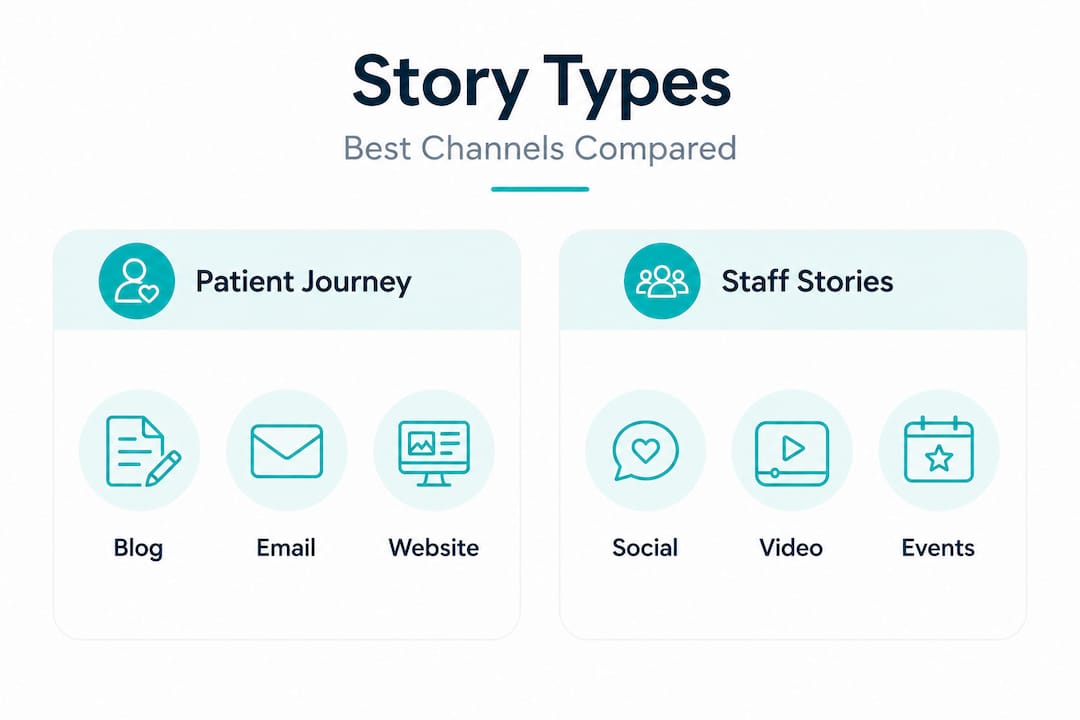
Pro Tip: Resist the urge to highlight extreme transformations. Clients who are considering subtle tweaks, which is the majority of your market, actually feel more comfortable with stories showing modest, natural results. A story about someone looking “refreshed, not done” will resonate far more than dramatic before-and-afters.
You can also strengthen these stories by following testimonial best practices that pull out specific, believable details rather than generic praise. And when you need content inspiration, exploring engaging content ideas can help you match story types to the right formats and platforms.
Real-world storytelling: Case studies and authentic voices
Knowing a framework is one thing. Putting it into practice with real people, real voices, and real vulnerability is where med spas often hesitate. But this is exactly where you can separate yourself from the competition.
Staff spotlights are one of the most underused storytelling assets in med spa marketing. Introduce your injectors, estheticians, and patient coordinators as full human beings, not just credentials on a bio page. Share why they chose aesthetics, what treatment philosophy guides them, and what they love about their work. Med spas should humanize their team to foster trust and relate better with clients. A short staff feature posted weekly builds a genuine cast of characters that clients grow to know and trust.
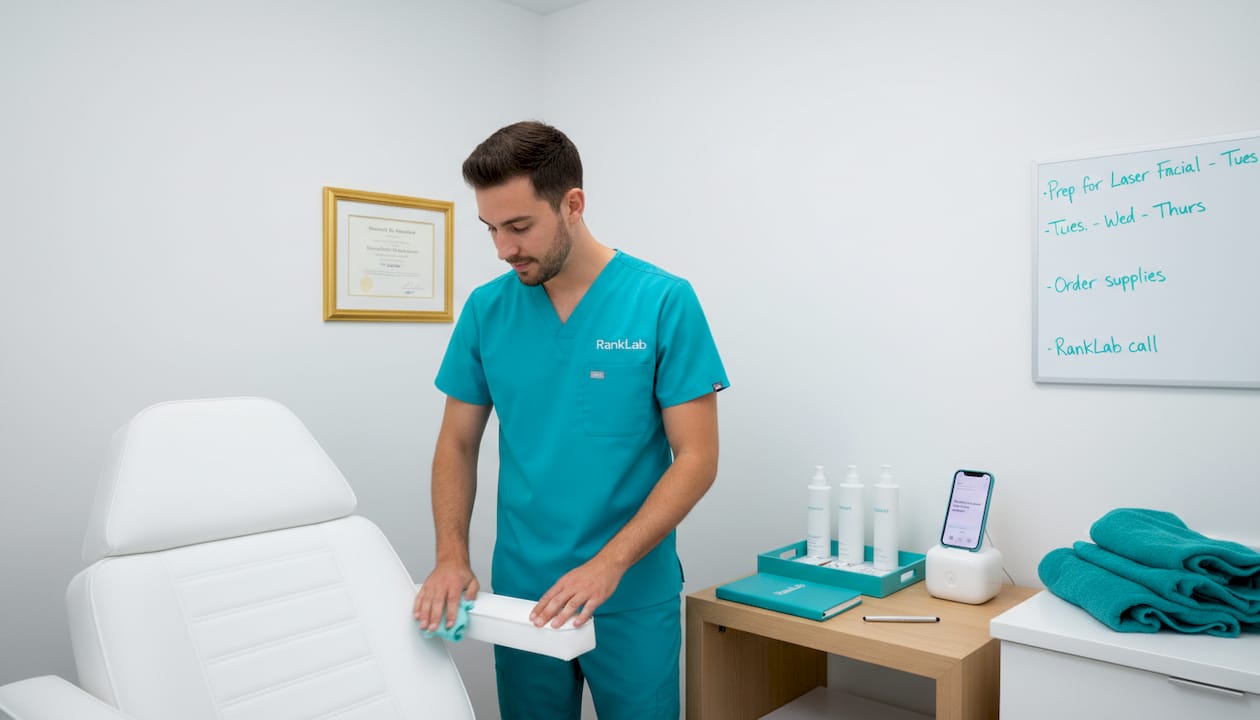
Founder stories carry enormous brand weight. If you started your med spa because you personally struggled to find a provider who listened, or because you wanted to create a more inclusive space in aesthetics, say so. That origin carries authenticity that no ad campaign can replicate.
Anonymized patient journeys work especially well in blogs and email sequences. You do not need names or faces. A narrative like “A client in her early forties came to us frustrated after years of sun damage that made her feel older than she was” gives readers enough detail to project themselves into the story without compromising privacy.
| Story type | Primary purpose | Typical engagement outcome |
|---|---|---|
| Case study | Credibility and trust | High consideration, longer reads |
| Client testimonial | Social proof | Booking inquiries, Google reviews |
| Staff profile | Culture and relatability | Follower loyalty, word-of-mouth |
| Founder story | Brand positioning | Long-term client retention |
Here is what makes real-world stories effective in med spa marketing:
- Specific details, a real feeling, a specific treatment, a precise outcome, beat vague claims every time
- Dialogue or direct quotes feel more human than polished paraphrases
- Showing a learning moment or a realistic expectation builds credibility
- Imperfection signals authenticity, a slightly hesitant client who still loved their result is more believable than someone who had zero doubts
Pro Tip: Overly perfected stories backfire. If your patient journey reads like an ad, clients sense it. Small details, like a client admitting she was nervous on the drive over, make the whole story feel real and trustworthy.
Understanding how client journeys unfold emotionally helps you identify exactly where stories can reduce friction and build confidence at each stage. Combine that with strategies for boosting med spa sales and your storytelling becomes both emotionally resonant and commercially effective.
Sharing your med spa’s story across marketing channels
Even the best story goes nowhere if it lives in the wrong place or gets formatted in a way that does not match how people consume content on that platform. Channel strategy is not just logistics. It is part of what makes a story land.
Authentic marketing that feels natural results in stronger parasocial bonds and long-term loyalty. That naturalness comes partly from matching your story format to the right platform and audience expectation.
Here is a breakdown of how to share stories effectively across your key channels:
- Instagram: Short video case studies under 60 seconds work well in Reels. Show a staff member walking through a treatment concept or share a quick, anonymized client win in Stories. Use carousel posts to walk through a Challenge-Solution-Result-Takeaway narrative across four to six slides.
- Website blog: Longer patient journeys and treatment education stories belong here. A 600 to 900 word blog post gives you space to build an emotional arc and rank in search results. This format also works well for founder stories and detailed staff profiles.
- Email marketing: Use story snippets as the opening hook of your email sequences. A short two-sentence client moment at the start of a promotional email dramatically improves open-to-click rates because it earns attention before asking for anything.
- Review platforms: Encourage clients to frame their reviews as short journeys, not just ratings. Train your front desk to ask a single question after a positive experience: “What was the moment you knew you were in the right place?” That prompts story-style responses rather than generic stars.
- YouTube: Longer format interviews with your founder or injectors, client Q and A videos, and treatment walkthrough narratives perform well here for clients in the early research phase.
Research consistently shows that content with a narrative structure generates significantly higher engagement than purely informational or promotional content across digital platforms. Brands that use consistent storytelling across channels also report measurably stronger client retention because the story creates continuity between visits.
For platform-specific guidance, Instagram storytelling tips tailored to med spas can help you get your format and frequency right. And since stories often generate reviews and word-of-mouth, pairing your content strategy with strong reputation management strategies ensures those authentic voices reach as many potential clients as possible.
Why authentic storytelling outperforms generic marketing
Here is the perspective most marketing advice skips over: polished content is not neutral. It actively signals distance. When everything in your feed looks like it came from a stock photo agency or a corporate brand playbook, clients notice, even if they cannot articulate it. What they feel is “this does not feel real,” and that feeling blocks trust more than any competitor ever could.
We have seen this pattern repeatedly with med spas that invest heavily in production quality but neglect authenticity. Their content looks great. Their engagement is flat. Their booking rate does not reflect the size of their following because polished, curated stories create admiration, not connection. And it is connection that converts.
The counter-intuitive truth is that subtle stories outperform dramatic ones. The client who says “I still look like me, just more rested” is more persuasive than the dramatic transformation reveal. That is because your real target clients are not looking for radical change. They are looking for a version of themselves they feel proud of, and they want to know you understand that distinction.
Authentic staff stories, the ones that show a practitioner’s genuine philosophy or even a moment of honest uncertainty, build the kind of trust that survives a single bad review or a competitor’s aggressive price promotion. Clients who feel genuinely connected to your team will call you before they Google someone else.
The brands that win long-term in aesthetic medicine are not the ones with the biggest ad budgets or the most polished feeds. They are the ones who make clients feel seen, heard, and understood before they ever book an appointment. That is what real storytelling delivers. You can see how authentic staff stories fit into a broader brand strategy that keeps clients coming back for years.
Boost your med spa’s growth with expert storytelling solutions
Crafting stories that actually connect, convert, and build loyalty is a skill, and it takes time you may not always have. At Aesthetic Rank Lab, we work exclusively with med spas to build marketing strategies that weave authentic storytelling into every touchpoint, from your website to your social channels to your automated follow-up sequences. Whether you need lead generation ideas built around compelling content, guidance on digital advertising for med spas that leads with your brand story, or automated marketing solutions that deliver the right story to the right client at the right moment, we are built for exactly this. Let’s talk about what your story could do for your growth.
Frequently asked questions
How can storytelling make my med spa more memorable to clients?
Storytelling forges emotional connections that visuals alone cannot create, helping clients remember your brand and feel familiar with your team before their first visit. Narrative structure humanizes your staff and builds the kind of parasocial trust that keeps your med spa top of mind.
What types of stories are most effective for med spas?
Client case studies, staff spotlights, and testimonials focused on nuanced, natural results consistently resonate most with potential clients. The Challenge-Solution-Result-Takeaway structure is particularly effective for treatment narratives and case study content.
Is it better to use polished or authentic stories on social media?
Authentic stories showing subtle, realistic outcomes and genuine human experiences build far more trust and engagement than heavily edited content. Natural-feeling marketing creates stronger parasocial bonds and drives longer-term loyalty among your followers.
How do I start collecting stories from my med spa clients?
Ask clients open-ended questions about their experience, focusing not just on outcomes but on the emotions and hesitations they had along the way. The richest stories come from clients who share what shifted for them emotionally, not just physically, during their treatment journey.