
TL;DR:
- Med spa lead scoring assigns numeric values to prospects based on their likelihood to book, prioritizing high-intent clients. Automation integrates qualification data, behavioral signals, and fit criteria to route leads efficiently, increasing booking rates and reducing staff burnout. Calibrating thresholds with actual data ensures the system stays effective and aligned with your specific patient base.
Med spa lead scoring is a systematic method that ranks each potential client by their likelihood to book a treatment, using a numeric scale from 1 to 100. The score is built from explicit qualification data, behavioral signals, and fit criteria collected the moment a prospect makes contact. Rather than treating every inquiry equally, lead scoring for med spas lets your team route hot prospects to immediate phone calls while placing lower-intent leads into automated nurture sequences. Tools like GoHighLevel, HubSpot, and custom CRM pipelines make this process automatic, so your front desk focuses on conversations that actually convert.
What is med spa lead scoring and how does it work?
Med spa lead scoring assigns each inquiry a numeric score based on their likelihood to book, enabling prioritization and tailored outreach from the first contact. The score is not a gut feeling. It is a calculated number derived from the answers a prospect gives, the actions they take on your website, and how well they match your ideal patient profile.
The process begins the moment a lead submits a form, sends a message, or calls your front desk. A qualification form captures the data points that matter most: which treatment they are interested in, their approximate budget, how soon they want to be seen, and whether they have had the procedure before. Each answer carries a point value, and the total determines where the lead lands in your pipeline.
Score ranges typically follow a three-tier structure. A score of 80 to 100 signals a hot lead ready for an immediate consultation call. Scores between 50 and 79 indicate moderate intent, and these prospects go into a structured nurture sequence with follow-up emails and text messages. Leads scoring below 50 receive educational content designed to build awareness until their readiness increases. This structure prevents your team from spending consult time on people who are months away from making a decision.
What criteria do med spas use to score leads?
The four strongest scoring criteria for med spas are procedure interest, budget readiness, timeline, and commitment level. Timeline and budget readiness are the most predictive of booking quality because they reflect urgency and financial capacity, not just curiosity.
Here is how each criterion typically contributes to a score:
- Procedure interest: A lead asking about Botox or laser resurfacing scores higher than one browsing general wellness services, because specific treatment interest signals research intent.
- Budget readiness: A prospect who confirms they have a budget in range for the service scores significantly higher than one who says they are “just looking at options.”
- Timeline: Someone who wants an appointment within two weeks scores at the top of the range. Someone with no defined timeline scores near the bottom.
- Commitment level: Has the lead had this treatment before? Have they consulted with another provider? Prior experience signals lower education friction and faster conversion.
- Fit factors: Does the lead match your ideal patient profile? If your med spa specializes in body contouring and the lead is asking about acne facials you do not offer, a low fit score triggers automatic disqualification.
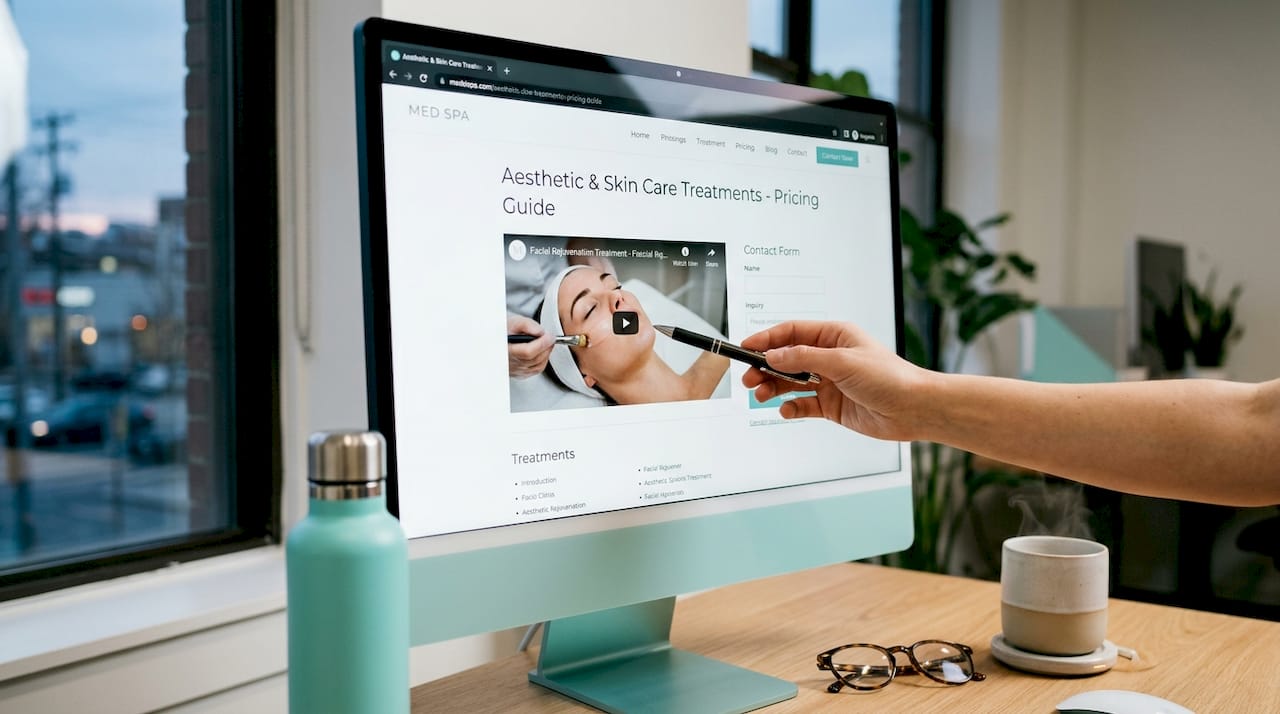
Behavioral signals add another layer. A lead who visits your pricing page, watches a treatment video, and then submits a form scores higher than one who only clicked a Facebook ad. These engagement signals indicate research depth and genuine consideration.
Pro Tip: Add a single question to your intake form asking “How soon are you looking to book?” with answer options mapped to specific point values. This one field often accounts for 20 to 30 points of a lead’s total score and dramatically improves routing accuracy.
How do automated lead scoring systems work in med spas?
Automation is what separates a lead scoring concept from a lead scoring system that actually runs your pipeline. CRM platforms like GoHighLevel use custom fields to capture qualification data and calculate scores without any manual input from your staff.
Here is how a typical automated workflow runs in a med spa:
- Lead submits a form. The CRM captures answers to qualification questions and assigns point values to each response based on rules you configure in advance.
- Score is calculated instantly. The system totals the points and assigns the lead to a score tier, triggering the appropriate pipeline stage automatically.
- Hot leads get real-time alerts. Staff are notified within seconds when a lead scores in the 80 to 100 range, including the lead’s name, contact info, treatment interest, and score. Speed of response at this stage directly affects whether you book the consultation.
- Medium leads enter nurture sequences. Automated email and SMS sequences go out on a schedule, delivering treatment education, social proof, and soft calls to action over days or weeks.
- Low leads receive educational content. These prospects are not ignored. They receive awareness-level content that keeps your brand visible until their intent increases.
- Score updates dynamically. If a low-scoring lead opens three emails and clicks your booking page, the CRM recalculates their score and can automatically move them to a higher tier.
Notification fatigue is a real operational problem. If your system alerts staff every time any lead submits a form, the alerts lose meaning. Set a threshold so that real-time notifications only fire for leads scoring above 75. Everything below that threshold runs on automation until the score changes.
Pro Tip: Build a “score increase” trigger in your CRM so that when a medium lead’s score crosses into the hot tier, your front desk gets an immediate alert. This catches leads who warmed up over time and prevents them from slipping through.
How do different lead scoring models compare?
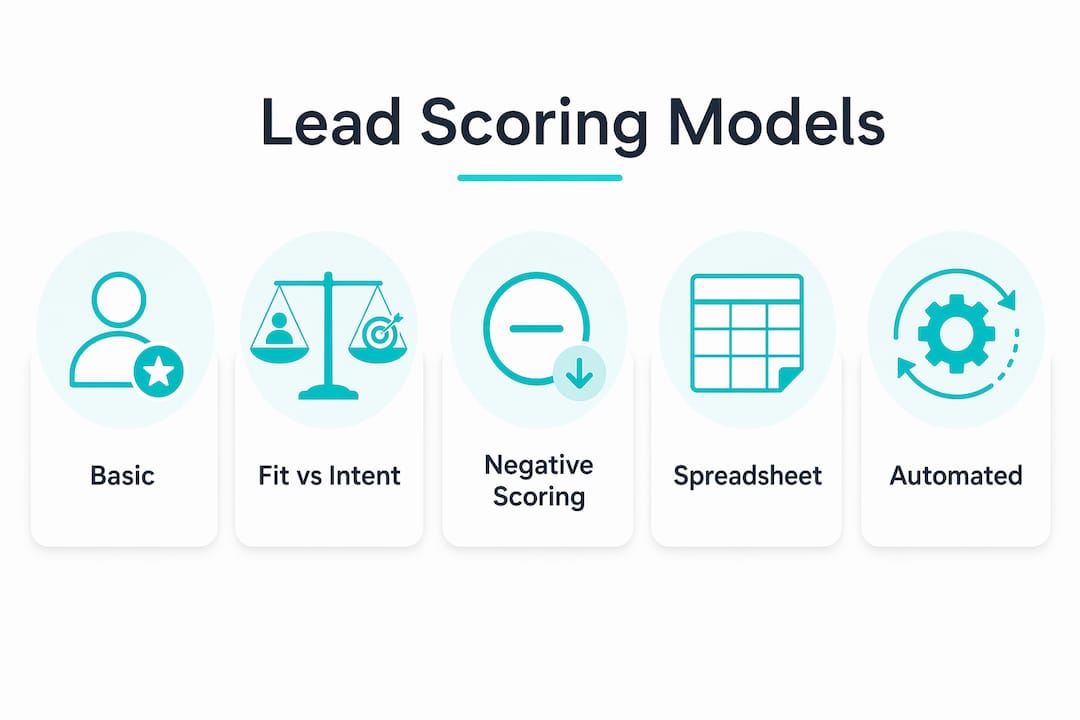
Not every med spa needs the same scoring model. The right framework depends on your service mix, average ticket size, and how your leads typically behave before booking.
| Model type | Best for | Key advantage | Watch out for |
|---|---|---|---|
| Basic 0-100 point scale | Most med spas starting out | Simple to build and adjust | Requires calibration after first 30 to 60 days |
| Fit vs. intent separation | Spas with diverse service menus | Prevents wasting consult slots on wrong-fit leads | Adds scoring complexity |
| Negative scoring model | High-volume lead environments | Filters cold leads automatically | Needs clear disqualification rules |
| Spreadsheet-based model | Small to mid-size spas | Low cost, fully customizable | Manual updates required |
Separating fit from intent is the most underused improvement in med spa lead qualification. Fit asks whether the lead matches your ideal patient profile. Intent asks whether they are ready to act now. A lead can be a perfect fit but have zero urgency, and treating them the same as a high-urgency lead wastes your team’s time.
Negative scoring deducts points for disengagement signals, such as a lead who has not opened any emails in 30 days, or one who indicated a budget far below your service pricing. This keeps your active pipeline clean and prevents your team from chasing prospects who have already moved on.
A spreadsheet-based model in Google Sheets or Excel works well for med spas that are not yet using a full CRM. You list your criteria in one column, assign point values in the next, and score each lead manually. It is not scalable, but it teaches you which criteria actually predict bookings before you invest in automation.
Calibrating your thresholds is not a one-time task. After your first 60 days of data, review which score ranges produced actual bookings and adjust your tier cutoffs accordingly. A spa that finds most bookings come from leads scoring above 65, not 80, should lower the hot tier threshold to capture more high-value outreach opportunities.
Why lead scoring is critical for med spa marketing success
Manual handling of every inquiry is the single biggest time drain in med spa client acquisition. When your front desk treats a $50 facial inquiry the same as a $3,000 body contouring consultation, you lose both efficiency and revenue. Qualified lead focus produces higher conversion rates, less wasted staff time, and clearer cost-per-booking metrics across your marketing campaigns.
The benefits of lead scoring for med spas extend across your entire operation:
- Faster bookings from high-intent leads. When a hot lead gets a call within five minutes of submitting a form, conversion rates climb sharply compared to a callback the next day.
- Aligned marketing and sales follow-up. Your med spa marketing strategies produce better ROI when the leads they generate are immediately sorted by quality and routed to the right follow-up path.
- Personalized nurture paths. A lead interested in Morpheus8 gets different content than one researching HydraFacials. Lead scoring makes this segmentation automatic.
- Clearer campaign attribution. When you know which campaigns produce high-scoring leads versus low-scoring ones, you can reallocate budget toward the channels that drive actual bookings, not just form fills.
- Reduced staff burnout. Chasing cold leads demoralizes front desk teams. Scoring filters the pipeline so staff spend their energy on conversations with real potential.
Key takeaways
Effective med spa lead scoring combines explicit qualification data, behavioral signals, and fit criteria to route the right leads to the right follow-up at the right speed.
| Point | Details |
|---|---|
| Score on a 1-100 scale | Assign point values to procedure interest, budget, timeline, and fit to rank every lead automatically. |
| Separate fit from intent | Evaluate whether a lead matches your ideal patient profile independently from how urgently they want to book. |
| Use negative scoring | Deduct points for disengagement or budget mismatch to keep your active pipeline focused on real prospects. |
| Calibrate thresholds with data | Review score-to-booking outcomes after 60 days and adjust tier cutoffs to reflect actual conversion patterns. |
| Automate real-time alerts | Notify staff within seconds for hot leads only, using score thresholds to prevent notification fatigue. |
What most med spa managers get wrong about lead scoring
I have worked with enough med spa teams to know that the first instinct when building a scoring model is to make it complicated. Managers want to score every possible variable, from Instagram follower count to the specific emoji a prospect used in their DM. That instinct kills the system before it starts.
The most effective models I have seen use five to seven criteria, weighted heavily toward timeline and budget. Those two factors alone predict booking readiness better than any behavioral signal. A lead who says they want an appointment this month and has a $1,500 budget is worth ten leads who clicked your ad three times but gave no qualification data.
The second mistake is skipping negative scoring entirely. Without it, your CRM fills up with cold leads that your team keeps attempting to contact, burning time and distorting your conversion metrics. Build disqualification rules from day one, even simple ones like “budget below service minimum” or “no response after 14 days.”
My honest advice: start with a spreadsheet model for the first 30 days. Score leads manually, track which ones book, and let the data tell you which criteria actually matter for your specific patient base. Then build that model into your CRM automation. You will calibrate faster and waste less time configuring a system around assumptions that your own booking data will contradict.
— Keith
Put your lead scoring to work with Aestheticranklab
Understanding lead scoring is step one. Connecting it to a marketing system that generates the right leads in the first place is where the real gains happen. Aestheticranklab builds med spa marketing automation systems that integrate lead scoring directly into your CRM pipeline, from the first ad click to the consultation booking. If you want to see which of your current campaigns are producing high-scoring leads and which are wasting your budget, explore our med spa lead generation strategies built specifically for U.S. med spas. Every system we build is designed to route hot leads to your team before they book somewhere else.
FAQ
What does med spa lead scoring mean?
Med spa lead scoring is the practice of assigning a numeric value to each prospect based on their likelihood to book a treatment, using criteria like budget, timeline, and procedure interest. Scores typically run on a 1-100 scale and determine whether a lead gets an immediate call, a nurture sequence, or educational content.
What is the most important factor in scoring a med spa lead?
Timeline and budget readiness are the strongest predictors of booking quality in med spa lead qualification. A prospect who confirms both a near-term appointment window and an in-range budget converts at a significantly higher rate than one who matches only demographic criteria.
How do I start lead scoring without a CRM?
Build a simple spreadsheet in Google Sheets or Excel with your qualification criteria in one column and point values in the next. Score each lead manually for the first 30 to 60 days, track which scores produce bookings, and use that data to configure your CRM automation.
What score range should trigger an immediate follow-up call?
Most med spa scoring models route leads scoring 80 to 100 for immediate outreach, with staff notified in real time. This threshold should be adjusted after reviewing your first two months of booking data to reflect your specific patient conversion patterns.
How does negative scoring help med spa lead management?
Negative scoring deducts points from leads who show disengagement signals, such as no email opens in 30 days or a stated budget below your minimum service price. This keeps your active pipeline focused on genuine prospects and prevents staff from wasting time on leads who have already lost interest.